
Home > 30 Years of North West Recycling > 30 Year Waste & Recycling Innovation Timeline

30 Year Waste & Recycling Innovation Timeline

Our 30 year history reflects continuous investment in recycling innovation, infrastructure and people.
This timeline showcases the defining moments of our journey — including major operational expansions, new processing technologies and sustainability initiatives that have strengthened our position as a trusted waste management partner.
Explore how we’ve evolved — and how we’re continuing to innovate for the future.

1995 – Brampton Skip Hire is established

1995

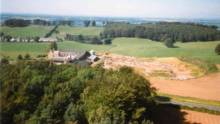
The company was founded in 1995 on a family farm in Brampton by Rick Allan with his parents, with the aim of providing reliable local waste services while reducing environmental impact. The business began with landfill operations and quickly expanded into skip hire and aggregate recovery as it became clear materials on site could be reused and sold. This early move into material recovery pre-dated major UK and EU waste policy shifts, positioning the business ahead of regulatory and economic drivers that would later prioritise recycling over disposal.

1996 – Environment Agency formed

April 1996

The Environment Agency was formed through the merger of the National Rivers Authority, HM Inspectorate of Pollution, and Waste Regulation Authorities. It created a unified body responsible for waste regulation, pollution control, and environmental protection across England and Wales. This established a cohesive regulatory framework, increasing oversight and tightening compliance requirements for waste operators, while strengthening enforcement and standardising environmental practices across the sector.

Image: Gov.uk

1996 – Finance Act 1996 Introduces Landfill Tax

October 1996

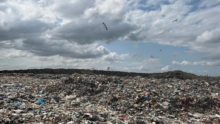
The UK introduced Landfill Tax in 1996, creating the first major financial driver to reduce landfill reliance. This was quickly strengthened in 1998 through a structured annual “escalator,” steadily increasing disposal costs year-on-year. Together, these measures fundamentally reshaped waste economics, making landfill increasingly unattractive and accelerating investment in recycling infrastructure and Materials Recycling Facilities (MRFs). The company’s early recovery activities aligned ahead of this shift, already reducing landfill dependency.
Image: BBC News

1999 – The EU Landfill Directive

April 1999

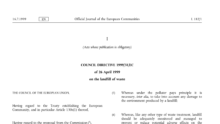
The EU Landfill Directive (1999/31/EC) forced long-term diversion away from landfill through binding targets and strict technical standards, particularly for biodegradable municipal waste. Its implementation (1999–2008) accelerated the shift away from landfill as the dominant waste option. This was reinforced by the UK Landfill Tax escalator introduced in 2000, which guaranteed rising landfill costs year-on-year, further accelerating demand for recycling infrastructure and Materials Recycling Facilities (MRFs).

Image: European Union

2008 – EU Waste Framework Directive

December 2008

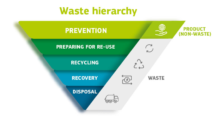
The EU Waste Framework Directive (2008/98/EC) made the waste hierarchy legally binding across member states. It required waste to be prioritised in order of prevention, reuse, recycling, recovery, and disposal, embedding this structure into law. This forced councils, contractors, and Materials Recycling Facilities (MRFs) to design systems around recycling performance rather than disposal efficiency, accelerating the shift toward circular resource management.

Image: European Commission

2009 – Rooted in Rockcliffe

2009

The business relocated to Rockcliffe in 2009 to support expansion and improved operational capacity. This move reflected adaptation to a changing regulatory and economic landscape, where larger, more efficient sites were increasingly required to meet growing recycling demand and stricter compliance standards. The new site enabled greater processing capability and positioned the business for scalable growth in materials recovery and recycling operations.

2015 – Closed Brampton Site

2015

The closure of the Brampton site marked a consolidation of operations following a period of industry-wide change. This restructuring reflected the decline of landfill reliance, rising compliance costs, and increasing demand for higher-capacity, more efficient recycling and processing facilities. The move aligned the business with evolving market conditions, where scale, efficiency, and materials recovery capability became more critical than traditional disposal-led operations.

2015 – UK Plastic Bag Charge introduced

October 2015

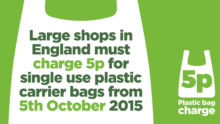
The UK introduced a 5p charge on single-use plastic bags, representing an early behavioural policy intervention designed to reduce plastic consumption and encourage more sustainable consumer habits. This signalled a wider shift toward resource efficiency and behavioural change in waste generation, using economic instruments to reduce avoidable waste at source and support longer-term reductions in environmental impact.

Image: Talking Retail

2015 – Paris Agreement – UN Climate Change Conference (COP21)

December 2015

The Paris Agreement is a legally binding international treaty on climate change, adopted by 195 Parties at the UN Climate Change Conference in Paris on 12 December 2015. It further reinforced landfill and recycling performance as a climate issue, particularly in relation to methane emissions from organic waste. This increased pressure on the waste sector to improve diversion rates, material recovery, and overall resource efficiency as part of broader national and international carbon reduction commitments.

Image: United Nations

2016 – Wood Waste Processing Line

2016

A bespoke processing facility was created to handle industrial wood waste, improving material separation and maximising recycling outputs for a major client. This is an example of industrial symbiosis, aligning with emerging circular economy principles in UK and EU policy, keeping manufacturing materials in use for longer. It aligns with sustainability goals by reducing virgin timber demand and improving resource efficiency in the wood products sector. This investment anticipated future policy emphasis on resource efficiency and material circularity.

2016 – SRF Processing Line – Turning Waste into Fuel

2016

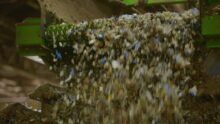
Following purchase of a separation plant from Waste Systems Ltd, the company began developing a Solid Recoverable Fuel (SRF) processing line to transform waste into high-quality fuel using shredding and separation technologies. This innovation enables waste to replace fossil fuels in energy production, directly supporting carbon reduction targets. Supplying SRF to energy partners helps divert large volumes of waste from landfill while contributing to low-carbon energy generation. This aligns with carbon reduction and energy recovery strategies under the Climate Change Act and EU renewable energy policy, and positioned the company ahead of increasing demand for alternative fuels and landfill diversion.

2017 – UK Clean Growth Strategy

October 2017

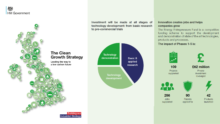
The UK Clean Growth Strategy is a government policy outlining how the United Kingdom aims to decouple economic growth from greenhouse gas emissions. It forms part of the broader plan to meet legally binding carbon budgets under the Climate Change Act and transition toward a low-carbon economy. This reinforced the role of waste-derived fuels and energy efficiency in achieving carbon reduction targets, further embedding waste management and resource recovery within national decarbonisation priorities.

Images: Gov.uk

2017 – Culture and Safety – Building from the Inside Out

2017

In 2016 and 2017 the company overwent a full-scale revamp of its procedures both in HR and H&S. New policies were written and a recruitment induction program introduced. Shift Safe Start was introduced which changed the H&S culture of the staff.

2018 – Glass and Stone Processing Line – Precision Recovery in Action

2018

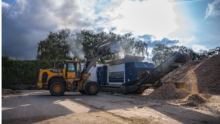
NWR began using air-based separation technology to recover aggregates previously lost to waste. Upgrading from early air-knife trials to Zac separation units improved efficiency and enabled separation up to 65mm. The system processes around 10 tonnes per hour and supports multiple waste streams, helping secure key contracts through improved recycling performance. This supports future policy requirements for higher recycling rates and improved material quality, positioning the operation ahead of tightening regulatory and market expectations for resource recovery and circular economy performance.

2018 – UK Resources and Waste Strategy

December 2018

The UK Government’s Resources and Waste Strategy for England sets a long-term framework for moving toward a circular economy by minimising waste, improving resource efficiency, and tackling waste crime. It established goals to double resource productivity and eliminate avoidable waste by 2050. This strategy set the direction for Extended Producer Responsibility (EPR), consistency in collections, and broader circular economy reforms, underpinning major changes in recycling systems and waste management across England and reinforcing the transition away from landfill dependence.

A North West Recycling themed background image

2021 – New Name for a New Era – Rebranding to North West Recycling

2021

In 2021, Brampton Skip Hire rebranded as North West Recycling to reflect its transformation in line with policy and industry shifts toward resource recovery and circular economy models. The change marked a shift toward integrated waste solutions supported by major investment and a focus on reducing landfill dependency. The rebrand anticipates the language and structure of future policy frameworks, aligning the business identity more closely with emerging regulatory, environmental, and market expectations around resource efficiency and circular economy delivery.

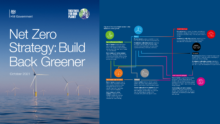
2021 – UK Gov publishes ‘Net Zero Strategy’

October 2021

The UK Net Zero Strategy sets out how the United Kingdom will achieve net zero greenhouse gas emissions by 2050, outlining sector-specific pathways for decarbonising the economy while supporting green jobs, innovation, and investment. It strengthened the role of the waste sector in achieving national carbon targets, reinforcing priorities such as landfill diversion, emissions reduction, and increased resource recovery as key contributors to the UK’s wider decarbonisation agenda.

2021 – Environment Act 2021 becomes law

November 2021

The Environment Act 2021 reshaped the UK waste system by introducing Extended Producer Responsibility (EPR) for packaging, shifting the cost of recycling from councils and taxpayers to producers. This directly changed Materials Recycling Facility (MRF) revenue structures, reporting requirements, and material quality expectations. It embedded circular economy principles into UK law, including EPR and consistent collections, strengthening the regulatory framework for resource efficiency and reinforcing higher standards for recycling performance and accountability across the supply chain.

2024 – Simpler Recycling Legislation for England announced

November 2024

Simpler Recycling (England) is a government reform requiring households and businesses to have consistent, standardised recycling collections across all local authorities, including separate collection of core materials such as paper, card, glass, metals, plastics, and food waste. For Materials Recycling Facilities (MRFs), it is designed to reduce contamination and improve the quality and consistency of incoming material streams, making sorting more efficient and increasing recyclate value. It increases demand for high-quality sorting and consistent material streams, strengthening the focus on performance-led recycling systems.

2025 – UK EPR packaging regulations come into force

January 2025

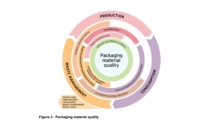
Extended Producer Responsibility (EPR) is a UK environmental policy requiring businesses that supply or import packaging to pay for the full cost of managing that packaging as waste, starting in 2025. It shifts financial responsibility from taxpayers to producers to encourage more sustainable and recyclable packaging design.

Begins shifting packaging waste costs from councils to producers under Extended Producer Responsibility and starts the full-scale transition of packaging waste funding and reporting obligations to producers. It rewards operators capable of producing high-quality recyclate, reinforcing earlier investment in separation technology and strengthening market demand for higher-grade recovered materials.

The Road Ahead

2026 and Beyond

North West Recycling continues to focus on innovation and sustainability, turning waste into value through advanced processing and energy recovery. The next phase of development will further expand capacity and strengthen the move toward a circular, low-carbon waste system.